The Bard's Grove

"There are times when people need stories more than they need nourishment, because the stories feed something deeper than the needs of the body."
Charles DeLint, The Onion Girl


Friday, August 10, 2012

Emerging Archetypal Themes: Leo, the New Queen & Dirty Dancing Cathy Pagano, M.A.


Emerging Archetypal Themes: Leo, the New Queen & Dirty Dancing


Hrana Janto offers beautiful photo-quality art prints of the image of Sekhmet shown here, as well as her other goddess images, at her website, http://www.hranajanto.com.


The emerging archetypal theme I’ve worked with this month is the journey of Individuation, the Leo initiation of becoming conscious of your original Self.  Due to the critical issues facing our world, individuation is the most important task any of us can undertake this lifetime.  Many spiritual people believe that we are at a moment of conscious evolution, and we are living in the moment of choice.  The only way to make a real choice is by living our essential truth, through being connected to what Carl Jung called the Self.  That’s what our movie heroine does.

The spotlight is on the new Queen for this Leo month because it is the Feminine Spirit that leads us to transformation and individuation. At the turn of the Ages, the Goddess returns to rebirth the world.  She is here, now!  And the truth is, women have led the way in the search for an authentic Self, partly because we’ve never been this free to understand ourselves before and partly because we make second-class men!  

In a world understood and shaped by male perceptions, women have had to run away from those masculine perceptions to find that Self.  But all of us have a feeling nature, a feminine side that wants to leave the old rules behind and find our own standpoint.  Our emotions as well as our beliefs shape our choices.  If they are left unconscious, we are easily led; when understood and acted upon, we are free.  
  
Leo is the sign of the King and Queen and ruled by the Sun, an ancient symbol of the Center.  The Lion’s gift to all of us is this search for individuation, for the ability to express who we are fully, with joy, pride and dignity.  The path of individuation leads inward to those feminine aspects of life which help us achieve transformation and inner freedom.  The truth is that outer freedom is an illusion unless you first achieve inner freedom.   

Both Leo and the Sun are apt symbols for our powers of self-awareness and generative creativity.  If we are in any way like the gods, it is because we are also creative. The Sun’s light is an ancient image of spiritual enlightenment, taking this exuberant energy even deeper.  So you see, Leo isn’t only about fun, applause and power.  Leo’s fixed nature can take the fire of creativity/destruction and ground and center it, stabilizing and sustaining the fire for the benefit of life.  

When women claimed our freedom in the 60s, we claimed it with our bodies as well as our minds and hearts.  Many of us threw off the shackles of patriarchal expectations and went exploring, and others met those expectations by entering the work world or staying home with their children.  But all of us were Father’s Daughters, women committed to the masculine ideals of patriarchy/capitalism.  Education in hand, we thought we were quite capable of handling life.  Well, life more often handled us, but though we were often disillusioned and sometimes hurt, we learned from our experiences and built on that new knowledge.  Many of us left the Father’s House of patriarchal expectations and became conscious women.

For the most part, women have been denied Leo’s gift for millennia, subjugated to the rules of a society that devalued women and offered few opportunities for freedom of expression.  I love the cosmic synchronicity that it is the Pluto in Leo women – the Baby Boomers – who first experienced this freedom on a large scale.  

Women want to find out who we are as opposed to just living as who we’re told to be.  The Archetypal Feminine energy is abroad once more, the Goddess has returned and her daughters are transforming the world with their freedom.  

As we incarnate this renewed archetypal energy, we each exemplify an aspect of the New Queen.  Being a Queen is being a female leader; being a Queen is embodying the emotional rhythms of life.  I wrote about such a new queen in the Aries blog about the movie Whale Rider.  The movie speaks of the shift of leadership from masculine to feminine if we want renewal of life.

An ancient function of the queen and king was to serve as mediators between heaven and earth, man and woman, god and goddess.  They represented the gods to their people, and their people to the gods.  They were spiritually conscious people and they were leaders of their people.   Isn’t it time again for wise leaders?

In a democracy, we are all called to become queens and kings.  We’re supposed to contribute our creativity to the world.  That’s what makes us whole, personally and collectively.  It’s not enough to create for our own sakes; we want to share our creativity with the world.  We want to make a difference when Leo is strong in us.

But first women have to leave the Father’s House and move beyond the patriarchal rules in their souls.  I’m not talking about rebellion, although that’s often a first step.  Or being sexually free, which isn’t the same as sexually whole. Women need to take the best and brightest of what we’ve learned from our ‘fathers’ and leave all the rules behind and find our own rules, based on our values, understanding and love. The first step is to return to our bodies, not just with sexual freedom but with understanding and love.  We need to discover our own courage, strength, truth, beauty, love, imagination, intelligence, power and mystery.   Happily, we’ve been left stories and fairy tales to show us how to do this. 

Fairy tales seem to be the bare bones of the primal archetypes of life.  Stories passed down through the ages to help us get through the transitions in life.  One big transition that’s been brewing for centuries is this women’s journey from the Father’s House to freedom.  There is an old story that tells the tale of a princess who fled the father’s house and gained her freedom and deep wisdom through day-long toil and a strong dose of patience.  Freedom from oppression is never free!

The tale gives us clues to achieving our quest for a conscious feminine standpoint to base our purpose on.  The basic pattern is set.  How we fill it in is up to us.  The Grimm fairy tale is called Allerleirauh and the movie that fleshed out this archetypal pattern is Dirty Dancing.

Allerleirauh: The Wisdom of Nature

Real individuality calls for freedom of choice – we must have the freedom to listen within and choose our own course to become whole.   In the past century, women, for the most part, have found outer freedom, and still more recently, some have found inner freedom.  But first, because patriarchy gives higher value to the outer world than to the inner realms of feeling and intuition, women used our freedom to go into the outer world, expecting to find equality with men.  But what we found was that we had to act like men because our social structures are male-based and cared nothing about feminine gifts unless they served patriarchy’s purposes.   

When women realize that patriarchy still wants to own our creativity and energy, many of us decide to leave the father’s house and go out on our own.  It takes the bravery and determination, intelligence and passion of a father’s daughter.  A father’s daughter who is ready to grow up and become her own woman.  When women start to listen to our own wisdom, the world prospers.  Through the years since the 60s, women have worked long and hard to change the culture, and we’re beginning to see the effects of adding responsibility and compassion, imagination and intuition to our public life. 

The story of betrayal, flight, toil and transformation goes like this.

Once there was a king and queen who were deeply in love.  But the queen got sick and began to die.  Before she did, she forced the king to make a promise that he would only marry someone like her, with the same golden hair.  The only one who fit the bill was their daughter.  And so the king decided to marry her.  Think of it – all her fertility and life will belong to him.

Being a smart father’s daughter, the princess demands that her father make her three dresses: one that shines like the Sun, one like the Moon, and one like the Stars.  Then she demands that he make her a mantle of furs with a bit of fur from every animal in his kingdom.  She believes he will never accomplish the tasks and she will be free.

Unfortunately, the king has a lot of people working for him, and he gets the clothes made.  And makes his demands – they will marry!  So the princess does what any conscious woman would do – she leaves.  Or rather, she runs away to the forest, dressed in her mantle of furs, taking a few treasures and her dresses with her in a nutshell.

The forest is, as you know, a place of mystery.  All those shadows and hidden places.  All the life and silence.  Finally exhausted from running away, the princess falls asleep in a tree.  Safe at last.  Only she isn’t.  For now a new king comes, a hunter who also lives in the forest.  And he finds her, thinks her a beast and brings her home to work in his kitchen.

He’s certainly different from her father.  In fact, it seems she dreamed him up in that tree, don’t you think?  Anyway, she works hard for a long time in the king’s kitchen.   Then the hunter king decides to hold three balls.  

Dancing is a must in fairy tales of transformation.  We need to catch the rhythm, need to incarnate the energy, need to focus it on our goals. Dancing is the most ancient form of this kind of archetypal energy transfer.  Like the pounding contractions of birth, rhythm takes over our bodies and we are at one with our nature again.  The Feminine is Nature’s rhythms; the Masculine is choice of rhythm. That’s the choice of an individual destiny.  

So the princess, who is now called Allerleirauh – of many kinds of furs – appears at the balls each time in one of her cosmic dresses, appearing to the king clothed in the light of the sun, the moon and the stars.  She knows who she is, she knows what needs to be done and she knows why it needs to happen.  But she never would have understood if she hadn’t been living in her mantle of furs – in her body wisdom.  That’s the first thing we need to validate and understand if we want to be free.  We need to listen – to our bodies, to our hearts, to our minds and most especially to our spiritual imagination – to be free.

After each appearance, she leaves some nourishment for the king, something for him to ponder and feel and desire.   Until he desires her just as much as she desires him.  She has shaped a new King while she’s been working in the kitchen of transformation and nourishment.  A new masculine energy within herself that will begin to resonate with the man in her life and transform him.
                       
 After the third ball, the king, who’s been enchanted by Allerleirauh since the beginning, recognizes her and desires her Wisdom and Beauty, and gives her his love and allegiance.   
This New Queen becomes the man of her dreams – and probably finds her mate too. That’s the story we find behind the 1983 movie, Dirty Dancing.

Dirty Dancing: the Birth of the Conscious Woman


I just spent an evening with a multi-generational group of my women friends, re-watching Dirty Dancing for the umpteenth time. I don’t know a single woman who doesn’t love that movie.  Why? There have certainly been other movies about first love, a changing society and rebellion, just as there are lots of movies with hot dancing in them.  Why do women of all ages gather round to experience this story again and again?  And love it every time?

I believe it’s because Dirty Dancing is built around the archetypal story of Allerleirauh
 When a story is based in an archetypal process, we can’t help but be affected.  The energies call to us.  We are all father’s daughters, and our next step in consciousness is to leave the father behind and find our own emotional standpoint.  This girl/woman Baby is a perfect persona for our innocent, idealistic father’s daughter who wants to become the heroine of her own life. 

The movie begins with Baby saying she couldn’t imagine ever finding a man as good as her dad.  She is the archetypal father’s daughter, idealistic, accommodating and ready to make her mark in the world. It’s interesting that Baby doesn’t have one strong exchange with her mom during the whole movie.  For Baby, mom is dead.  It’s dad who nurtures her – the real sign of a father’s daughter.   Baby is just that – a baby - she goes along with whatever her father suggests, even when she feels uncomfortable.  She doesn’t really fit into the resort’s activities like her mother and sister do.  She has other interests.

Like the dancer, Johnny.  His sensuality grabs Baby’s attention.  He’s Baby’s hunter king of the forest.  She’s smart enough to know she’s interested and courageous enough to seek him out.  She pays attention and is the one who discovers that Penny is in trouble.  And then she does something about it.  She gets involved because of her idealistic beliefs and because of her interest in Johnny.  She leaves the father’s house when she helps Penny without telling her father.  She starts to wear her mantle of furs when she offers to take Penny’s place in the dance.

She learns to dance. Everything her father taught her gets enhanced once she brings her energy into her body in the dance.  She comes into herself and becomes a woman.  

After Baby tells Mr. Kellerman she was with Johnny the night the wallet was stolen, Baby’s father won’t talk with her.  So she goes to confront him in the best scene of the movie.  And the truth of the matter shines out.  He is the father who rejects the reality of his child. The father who would rather marry his own daughter than let her live her own life. 

Baby:  I’m sorry I lied to you, but you lied too.  You told me everyone was alike and deserved a fair break, but you meant everyone who was like you.  You told me you wanted me to change the world and make it better, but you meant by becoming a lawyer or economist and marrying someone from Harvard.  I’m not proud of myself… There are a lot of things about me that are not what you thought, but if you love me, you have to love all the things about me.  And I love you, and I’m sorry I let you down, Daddy.  But you let me down too.  

Baby arrives at Kellerman’s a baby in truth and leaves as a woman named Frances, standing in her own truth.  And the interesting thing we find out at the end of the story is that Baby’s mother claims that Baby gets her dancing ability from her!  While mom doesn’t seem to have an identity of her own, being another father’s daughter herself, she claims the Feminine power of dance and rhythm as her great gift to her daughter. 

The power of a good story comes from its connection to archetypal themes.  Dirty Dancing’s power lies in showing us the process of leaving the Father’s House and becoming a conscious woman.  That’s the gift that Leo offers all of us – the task of becoming conscious human beings.

Saturday, June 23, 2012

EMERGING ARCHETYPAL THEMES: ACROSS THE UNIVERSE: The 60s Are Back!


ACROSS THE UNIVERSE:
CANCER: AWAKENING OUR EMOTIONAL BODY
THE BEATLES, THE 60'S AND COSMIC CLOCKWORK


As we enter the astrological month of Cancer, we get to work with the archetypal energy of Mother and the birth of our emotional bodies, the ability to integrate our soul’s purpose into consciousness.  Cancer teaches us the value of emotional intelligence, creativity and nurturing, and works in us to help us feel secure in our own skin, because we are living our truth.  Cancer is a cardinal sign, coming at the turn of the seasons, and so it is action-oriented.  Cancer’s intuition picks up the surrounding ‘vibs’ and steps in to make things ‘better’.   Or that’s the intention.
  

The archetypal Great Mother gives birth to the Universe as well as to each one of us, and how we relate to the Great Mom tells us something about how we feel about ourselves.  The good Mother is one who loves us for who we are; the negative Mother rejects who we are. 

While we each have our own moms to contend with, we also come out of a cultural matrix (mother, womb).  And everyone born in the 1940s up to the present day has the same cultural matrix - the 60s!  Whether you were there or not, your emotional body has been shaped by your response to what happened in the 60s.  So no matter if you or your parents were hippies or yuppies or conservative Christians, the 60s are alive in you.   

For some, the 60s were a disruptive time when everything went to the dogs; for others, it is a continuing source of inspiration and hope.  It is obvious that the patriarchy is paired with the Negative Mother, sending out a negative message:  “Who among us is perfect enough that we no longer need the ‘fathers’ to guide us?”  The patriarchy is alive and well in our government institutions, busy trying to legislate how we can live and what we’re allowed to do.  But because the Great Mother returned to our consciousness in the 60s, especially when we saw ‘Earthrise’ from the Moon, the positive, loving Mother wants to let us know that She supports our growing up at last, encouraging us to take responsibility for our own lives and for each other.  She’s maturing our emotional bodies and turning us into adult human beings, all the while reminding us to stay young at heart and playful, creative and caring.

The Cosmic Story: The Return of the 60s: Let the Peaceful Revolution Begin

With the call for CHANGE getting louder and louder, is it any wonder we're all feeling the echoes to the 60's? 

I don't know about you, but I lived through the 60's and I just know they're back! It's a feeling, it's the similarities of social unrest – and it's something more cosmic. I know it because I know that a cycle that began in the mid-60s is coming up to a major crisis point in 2012 and the planets that create this cycle are now at 90* to each – a bending of energy that calls us to the Hero’s Journey to create change where it is needed. These energies stir up the pot – change is in the air. But what are we going to do about it? Because all the good energy in the world can go to waste unless We The People do something. 

There are many people who still question whether Astrology has any connection to this energy of change we're feeling. My astrologer friend Caroline Casey says, “Believe nothing. Entertain possibilities! Astrology is not a belief system; it is a [symbolic] language of the dynamic interplay between our interior life and the exterior world.” All we can do in the face of the immensity of life is to entertain possibilities. Why not imagine, for a moment, that these possibilities exist? That we are connected to our planet, to our solar system, to our galaxy, to each other. Scientists know that we are affected by the Solar cycle of sunspot activity as well as by the Moon's cycle.  If we really believe we are all made up of the same cosmic ‘stuff’ of creation, then it isn’t too far a stretch to entertain the possibility that we are influenced by each other, and by the planets.

Did you know that most of Western civilization's greatest philosophers and scientists were also astrologers? Check it out for yourselves.   I'm using information from an amazing, award-winning book called “Cosmos and Psyche: Intimations of a new World View” by Richard Tarnas, a professor of philosophy and depth psychology at the California Institute of Integral Studies in San Francisco. Tarnas spent 30 years researching astrology, (at first to debunk it!) and came away with the view that there is a direct connection between planetary movements and the archetypal patterns of human experience. He explores the planetary cycles and how they play out in human cultural events. 


In the 60s, two planets aligned in the heavens in the earth sign of Virgo – Pluto, the planet that represents the archetypal energy of death, re-birth and evolution, and Uranus, the archetypal energy of revolution, innovation and freedom. They were joined during the exact conjunction in 1966 by an opposition from the planet Saturn, representing the archetypal energy of form, authority, maturity, frustration, and constriction in Pisces, the sign of the collective unconscious.  There was a cosmic call for the old forms (Saturn) to dissolve (Pisces) so new life could emerge.  A headline from the 60s that God is Dead was a sign of this dissolution.  Of course, the old ways didn’t want to die, and they made an even bigger grab for power as this new possibility started to grow.

In 2010, these three planets aligned again, expect now in a three-sided 90 degree aspect to each other. The alignment is one of tension which propels us into action.  And you can see what has resulted: the patriarchy is taking its last stand as we the people all around the world finally wake up to our own responsibility for creating a better world.  It is not governments which create change, it is people.  

Tarnas states: “I was encouraged to examine the possible existence of historical correlations with planetary cycles when I encountered a number of highly suggestive patterns in which certain cyclical alignments between the outer planets (Jupiter, Saturn, Uranus, Neptune and Pluto) coincided with major historical events and cultural trends of a distinctive character, as if the specific archetypes associated with those planets were emerging on the collective level in periodic cycles.” (pg. 141, C&P) 

Because of the great distance of both Pluto and Uranus from the Sun and the Earth, their cycle is one of the longest between two planets, lasting anywhere from 113 to 142 years (because of Pluto's erratic orbit). When Tarnas went back to study what happened during proceeding conjunctions and oppositions of these two planets, he found that each time there were similarities of cultural expression – back to the times of Spartacus in ancient Rome! 

What Tarnas found was that the archetypal principles related to these two planets found full expression in the 60s. The planet Uranus correlates to Promethean characteristics: “emancipatory, rebellious, progressive and innovative, awakening, disruptive and destabilizing, unpredictable, serving to catalyze new beginnings and sudden unexpected change.” The planet Pluto is associated with Dionysian characteristics: “elemental, instinctual, powerfully compelling, extreme in its intensity, arising from the depths, both libidinal and destructive, overwhelming and transformative, ever-evolving... possessing a prodigious, titanic dimension, empowering, intensifying and compelling in whatever it touches on a massive scale.”(pg.142, C&P) 

Each time these two planetary energies synergistically merge, they produce “widespread radical social and political change and often destructive upheaval, massive empowerment of revolutionary and rebellious impulses, and intensified artistic and intellectual creativity. Other distinctive themes of these historical periods included unusually rapid technological advance, an underlying spirit of restless experiment, drive for innovation, urge for freedom in many realms, revolt against oppression, embrace of radical political philosophies and intensified collective will to bring forth a new world. “ (pg. 144, C&P)

Not only were these planets in a conjunction alignment during the 1960s, they were also in conjunction from 1845-1856, when there was a wave of revolutionary upheavals across Europe, China, Japan, India and the Ottoman Empire. When these two planets were in the opposition alignment from 1896 to 1907, many social and political movements were born – progressive labor movements, the Women's movement, the black civil rights movement and the beginnings of socialism. Before that, another opposition took place during the decade of the French Revolution, 1787 to 1798. The word “revolution' came into “wide use in the 1790s in its present meaning of sudden radical change of an overwhelming nature, bringing into being a fundamentally new condition.” (Pg 144, C&P). 


The revolutionary impulse during the 60s and the French Revolution wasn't confined to politics, but occurred in every aspect of cultural life: “in the music heard, the books read, the ideas discussed, the ideals embraced, the images produced, the evolution of language and fashion, the radical changes in social and sexual mores. It was visible in the incessant challenge to established beliefs and widespread embrace of new perspectives, the movements for radical theological and church reform and anti-religious revolt, the drive towards innovation and experiment that affected all the arts, the sudden empowerment of the young, the pivotal role of university communities in the rapid cultural shift. And it was evident above all in the prodigious energy and activism of both eras, the general impulse towards extremes and 'radicalization' in so many areas, the suddenly intensified will to construct a new world.” (P. 145, C&P) 

The revolution of the 60s was not a unique cultural event that will never be repeated, although for Baby Boomers, it was an utterly unique experience.  But it is being repeated now, on a higher level, if you will. We do have to continue the revolution.  But we can't get upset that it got sidetracked.  The old always tries to pull us back into its clutches before we really break free.  That's what I love about astrology.  Not that it sets up a certain 'fate' but that it works through cycles, and that lets us know that there are certain energies to contend with within the cycle.  The moon cycle is the best metaphor for it.  In terms of the 60s and this particular conjunction of Pluto and Uranus, we've been in a new moon through crescent moon phase, which means that the energy was first an unconscious upwelling of new ideas and energy and then, when we catch sight of what we really need and want to do, we are pulled back by all our fears and our conditioning.  It's at the quarter moon phase that we finally go on the hero's journey and make the break from the past. 
 Pluto and Uranus have just come to their first square aspect on June 24th; it is like the quarter moon phase of the lunar cycle. A square is a challenge – a call to action. The real Hero's Journey.  This is when we have to step up and stand for those values that we all proclaim we loved in the 60s.   What will make this next stage of the 60s revolution even more challenging is that the planets will be in Cardinal signs – the signs that signify the Solstices and Equinoxes. So it will be a dynamic and energized time, and it is vitally important to get it right this time. We will have to change the way our culture does business, by reigning in corporate power. We will have to grow up and become responsible, both as individuals and as a nation so we can save our environment. We will have to treat the rest of the human race, and other nations, as our equals, and understand that we are all in this together.   We might even have to take to the streets again, like our friends, the French.   If we do, the cosmic energies will be with us. 

Are you ready?

The Archetypal Bards:  How Muscians & StoryTellers Change the World


We have to go back to explore the archetype of the Bard, because it is really the music of the 60s/70s that changed us and still keeps us within the matrix of the 60s.   We need to understand why our artists are so important to our lives and to these times of change. Archetypes are the patterns that shape our human consciousness. They are the images of the instincts that make us human. The archetype of the Bard acknowledges our collective need to understand ourselves through images, to give coherence to our lives through stories and song. And because of that need within humanity, some people resonate with this archetype and are called to become the storytellers of their tribes. 


Bards help shape their societies by singing about the shared values of the tribe, teaching the next generation about their duties, their capabilities, and their place in the world. Stories from the desert speak of the need to share everything, for otherwise no one survives in the harsh landscape. The stories of the Celts shaped their view of warriors as being sensitive, boastful, brave and honorable. Troubadours of the Middle Ages shaped their society through their songs of courtly love. Bards are the ones who remember, the poets, the news-givers, the truth-speakers, and the visionaries of their people who see the truths of their times and give their people a perspective on them.  

Unfortunately, archetypes can lose their power and then they become stereotypes.  That’s when bards become entertainers.  Entertainers keep us entertained.  Bards wake us up to possibilities.

All ancient peoples had someone who represented this archetype of the Bard, the storyteller, the singer of songs. In those societies, Bards were highly honored, and they had the power and the responsibility to influence their people's beliefs. In our modern culture, our singers and storytellers are still honored with money and fame, although not many are worthy of being called True Bards. Those who are in it for the money and fame are the ones we call entertainers. Because most entertainers don't take their responsibilities as Bards seriously, we sometimes forget that our artists really have this power to teach us about our world, for the power of the Bard resides in the Imagination. 

The 60s Matrix: Yellow Submarine

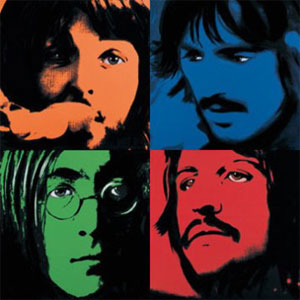
The Beatles were true Bards.  There’s no question about that!  Their music was one of the most important sound-tracks of the 60s, and their musical imagination helped shape our response to life.  Their music still shapes our imaginations and opens us to possibilities.  Imagine our life now without the Beatles’ influence.  Would we want to ‘give peace a chance’, believe ‘all you need is love’ or even ‘Imagine’?  


While their music shaped our lives, the stories they told showed us our journey.  From Hard Day’s Night to Help! we saw 4 guys from Liverpool dealing with modern life and celebrity with humour and charm, intelligence and feeling.  But it was Yellow Submarine that let us in on their secret.  We all discovered that we each had a yellow submarine inside us, and we all took a dive into the collective unconscious to explore that unknown realm in the hopes of re-animating the music of life.  

1968’s Yellow Submarine was not only a visual and musical eye-opener, it was a psychological masterpiece.  It’s hard to believe that most people in the 60s didn’t even know about the psyche within each of us, or that we could become aware of who we are by looking within.  Our western culture had lost touch with the inner world in its search for outer facts.  The big revelation of the 60s was that we had an inner aspect of our personalities that needed to be explored and understood.  The 60s were all about a collective awakening that gave us tools for self-awareness.  What was once the province of religious dogma became the individual need to take an inner journey of self-discovery.   The Pluto/Uranus conjunction took place in the sign of Virgo, the sign that propels us to self-knowledge.  It is the sign that tells us how to belong to ourselves.  And that’s really the message of Yellow Submarine:  it is up to each one of us to stop our inner blue meanies.

Back in the 60s, there was no Oprah or Dr. Phil to turn us onto new tools for self-awareness.  Our musicians did it.  Joni Mitchell, Carly Simon, Simon & Garfunkle, Bob Dylan, Leonard Cohen, the Beatles – to name a few.  They gave a shape to our new experience of freedom and self-awareness.    They helped us define ourselves as different from our parents.

Yellow Submarine did even more.  It gave us a whole story to understand the changes going on within our culture and within ourselves.


The story is mythic.  It begins in a paradise of affirmation and music, Pepperland.  Life is sweet.  People are content.  But then the Blue Meanies come along – the patriarchal bankers and politicians who take away our sense of community and possibility.  They turn everyone to stone, separating us from each other and from the music of life.  How many people today are taking anti-depressants?  Or are on heavy-duty drugs? Far too many.  The Beatles got that one right! 

Eleanor Rigby becomes the epitome of these frozen Pepperlanders.  “Eleanor Rigby picks up the rice in the church where a wedding has been, Lives in a dream. Waits at the window, wearing the face that she keeps in a jar by the door.  Who is it for? All the lonely people.  Where do they all come from? All the lonely people.  Where do they all belong?”

It’s Ringo, the lonely one, who ‘misses me mom’ and has ‘a hole in me pocket’, who can empathize with Fred, the captain of the Yellow Submarine, who is sent to find help for Pepperland.  Inner and outer meet and become aware that something is wrong.  Ringo brings Fred to the attention of the other Beatles, who are engaged in their own experiments in consciousness.  All those doorways leading . . .to worlds upon worlds.


When the Beatles go with Fred in the Yellow Submarine, they encounter parts of themselves, past, present and future.  And all the memories and monsters that inhabit our psyches.  And of course, that’s where they meet the NoWhere Man: the pure intellect which often only spouts gibberish.  But he’s lonely too, and compassionate Ringo brings him along to Pepperland.  This left-brain bore can help them, but only by mistake it seems.

Once back in Pepperland, Fred and the Beatles find the Blue Meanies have total control over the population.  And it’s only the Beatles and their music which can stop them.  When they awaken all the Pepperlanders from their collective blue meanie sleep, colour comes back into life and eventually, even His Blueness, the head Blue Meanie, is transformed by LOVE via our little nowhere man.  


ALL YOU NEED IS LOVE becomes the battle cry as the Beatles re-awaken the archetypal band, Sgt. Pepper’s Lonely Hearts Club Band.  A worthy anthem.  One we’ll need as we face the dying patriarchy in these next years of social unrest.  It echoes the June 5th, 2012 major Venus transit to the Sun.  This cosmic happening brought back an awareness of the Goddess’ love and signals that the Goddess has regained her voice!  So remember to speak with love in your hearts if you want to create change.  The Goddess is watching!

The last image in the movie is of a lotus growing and glowing with possibilities as the Beatles sing:  “When I look into your eyes, your love is there for me.  And the more I go inside, the more there is to see.  It's all too much for me to take.  The love that's shining all around you.  Everywhere, it's what you make.  For us to take, it's all too much.”
The Beatles got the message right.  We are losing our sense of beauty and community to the corporate story.  The Blue Meanies are once again attacking our way of life.  It is through fearlessly confronting these negative energies that destroy life – confronting them with Love – that we will win the day. 

Across the Universe: Going Back to theFuture

In the 40 years since the Yellow Submarine came out, our culture has become more psychologically astute.  We have the tools of consciousness at our disposal, but in becoming more self-aware, we seem to have lost the passion of youth and our ideals.  That’s where “Across the Universe” comes in.  It reminds us of what was happening during the 60s and how we really believed in the power of love to change the world.  We need that passion once again.


Julie Taymor's brilliant movie “Across the Universe” brought me right back to the 60's on a visceral level. This movie could have come right out of John Lennon's imagination: the movie could have been made by the Beatles – it has the feel of who they were and what they did together. So if John and George are listening from the Beyond, and to Paul and Ringo, I want to thank the Fab Four for giving us another chance to really hear their music and amazing lyrics, and re-visit their music's significance for all our lives during those wonderful, turbulent, tumultuous years.

Each of us can tell our own stories, but it takes someone bigger to shape and recreate our collective story. That's exactly what the Beatles did for us in the 60s.  As True Bards, their music still speaks to new generations.  Julie Taymor, the amazing director who created the Beatles rock opera “Across the Universe” is shaping up to be a True Bard as well. This movie re-awakens us to our collective story of change that we experienced in the 60's. It says our story is still with us. The question is what are we going to do about it?

If you haven't seen “Across the Universe”, run out and rent it right now. Besides its considerable high production values – the settings, the dances, the costumes - the feeling behind it makes it delightfully magical to watch!   It simply tells the story of the 60's as it unfolded within our psyches to the soundtrack of the Beatles' music. Their music shaped my consciousness as well as expressed what was going on inside me and everyone else I knew. And now my children and anyone else who loves the Beatles but weren't there for themselves can see how those times might have played out in our lives.

The story itself is simple and fun, yet complex and psychologically astute. If it was a novel, I'd say it was an historical fantasy. Part Beatle images and lyrics (one character says of another, “She crept in through the bathroom window.”); part semi-biographical (Sadie as a Janis Joplin character/Bono as a Ken Kesey/merry prankster character/a band (the Beatles?) playing music on a rooftop); part social commentary (draftees in formation carrying a Statue of Liberty on their shoulders are they trudge through the jungles of a miniature Vietnam singing “She's so heavy” from “I Want You”). Across the Universe” has it all. The raw emotions of the songs come out through the acting. It's a mesmerizing mix of social commentary and youthful longing, hope and love. 

Taymor's use of imagery is symbolically astute. The movie opens with images of wildly breaking ocean waves superimposed with images of social unrest, and then an image of a young woman – Lucy, our story’s love interest, but even more important, the awakened Feminine Spirit. Many people have dreams of tidal waves, and one of the symbolic meanings of these dreams is that the collective unconscious is stirring – all of our culture's repressed values and needs are rising up and overwhelming collective consciousness. And the beautiful young woman is an image of the New Feminine Spirit that is arising in the collective unconscious – a spirit that demands that we pay attention to the repressed feminine qualities of life – connection, compassion, intuition, feelings, nurturing, love and life. Taymor ends the movie with a heartfelt cry of “All You Need Is Love.” The rest of the story shows us how this is played out. 

The story itself is true to the 60s. An all-American teenager, Lucy (Evan Rachel Wood), leaves home to follow her older brother Max (Joe Anderson) to New York after her boyfriend dies in the Vietnam War. In Liverpool, Jude (Jim Sturgess) leaves his work in the shipyards and comes to New York and meets Max, and they all end up living at singer Sadie’s (Dana Fuchs) Greenwich Village apartment along with JoJo and Prudence. This youthful 'family' experiences the turbulence of the 60s together.  There’s naïve Lucy whose eyes are opened to the possibilities of life beyond her 50's, sheltered upbringing; adventurous Brit Jude who breaks away from his working-class roots to make it as an artist in New York; Lucy’s brother, Max, a college dropout who eventually gets drafted and sent to Vietnam; Sadie, a Janis Joplin-esque rock singer; her guitar-playing lover Jo-Jo, who comes from the riot-torn streets of Detroit; and a closet lesbian named Prudence. As these sympathetic characters go through the ups and downs of life in the 60's, we share their growing consciousness that the most important thing in life is LOVE. I left the movie feeling and knowing that this is still true.

2012 and Beyond

With this first of seven squares between evolutionary Pluto and revolutionary Uranus, we enter a new phase in the promised cultural transformation of the 60s.  The Cosmic Story assures us that change will come, although not without struggle and sacrifice.  The word sacrifice means to make sacred.  We are being called to a sacred task, because this next step in our human evolution has to be a conscious choice.  We have to choose to save our environment from further degradation.  We have to choose freedom and equality over an illusion of safety and comfort.   


We no longer have the luxury to sit back and wait for our governments and corporations to do the right thing. We have to do it for ourselves.  If corporations won’t change, we have to withdraw our support – i.e., money.  We do have power – they have given it to us because they need us to buy their poisonous products.  We need to learn other ways of taking care of our needs.  We have to stop being conspicuous consumers.  We did it in the 60s and we can do it again.

The Uranian/Promethean wake-up call is ringing in our minds, hearts and souls as we've witnessed the Plutonian revelations of truth about our government, our religious beliefs, our financial institutions and our technological advances.  Uranus in the sign of Aries calls us to our authentic Self.  Pluto in Capricorn asks us to demolish the patriarchal strictures and rules which govern our behavior.  Most of us will never be thin enough, beautiful enough or rich enough to be considered one of the elite of patriarchy.  So why not turn our backs on a system that will never really include us, except as humble worker-bees.  

 The next six squares of Pluto and Uranus will carry us far into the changes we seek.  We just have to open our imaginations and see what new life wants to be born as our old culture disintegrates.   Hopefully, our artists and bards will sing us the songs of hope and possibilities that await us on the far side of our challenge.  Pluto will be in the sign of Capricorn until 2024.  It is not going to be a quick or easy transformation, but with a strong vision and a compassionate heart, we can each play our part in birthing a new world.

The Beatles saw what needed to happen.  And so did Julie Taymor.  Go watch these movies and feel the spirit of the 60s come alive within you.  You’ll be glad you did!

It's time we got this Peaceful Revolution under way.

Blessings from The Bard's Grove,
Cathy Pagano


Thursday, May 17, 2012

Emerging Archetypal Themes: LadyHawke


LadyHawke:
The Union of Opposites, Gemini & The Lovers


If I had to pick an archetypal embodiment of Gemini, it would be the Bards, those ancient and modern storytellers and wisdom-keepers who inspire their people with imagination and hope.  Bards understand what people are going through - they create, paint, dance and communicate what they see through stories and songs to help people connect to the great Mystery of Life.  This is Gemini’s soul task – to experience, learn, remember and share cultural wisdom.  The Beatles are modern Bards, passing along to the rest of us music and stories which embodied the new vision of life we were exploring in the 60s.  They gave us a new template for life.

What happens when our collective wisdom no longer serves life?  What happens when there is a split between our beliefs and our actions?  That’s when Bards and their stories become important.  They take us to the archetypal realms, to the rich storehouse of ancient wisdom that can help us accept and embody our individual purpose and power.  

Something new arises.  A new perspective achieved.  Growth.  Consciousness.

The Sign of Gemini  

The sign of Gemini, the divine and mortal Twins, not only speaks to how we learn and perceive the world, but also symbolizes our dualistic world, the 0’s and 1’s of our binary code.  Our fifteen billion year old universe gave rise to the dualities of life and so we perceive things through the lens of day and night, sun and moon, good and evil, life and death, conscious and unconscious, right and left, male and female.  


            In Tarot, Gemini is represented by the major arcana card, The Lovers.  When we look at the possible meanings of the Lovers, they all hint at the union of opposites, the great alchemical transformation which gives rise to the Self, the Divine consciousness within us.  Gemini and The Lovers seek synthesis, combining the head and the heart, feeling and intellect.  And they represent male and female coming together as two equal, complementary and yet opposite energies.  And of course, this bond includes sexuality, which is the most intimate form of bond between these opposites.  What forms the real bond, though, is Love, the divine connector.  

            Unfortunately, patriarchy through its religious institutions has marginalized the truth of love at the same time as it has glorified it.  How can it be otherwise when the only god-image we are allowed is masculine?  Our old patriarchal paradigm of partnership is innately imbalanced, giving greater weight to masculine, rational, solar consciousness than to feminine, imaginative, lunar consciousness.  Love and relationship are the most sacred experiences of Life, and yet as we see in the myth of Psyche and Eros, we are most often left to stumble into love without any real knowledge of how to act and what it means.  Our world is sorely in need of a new paradigm of partnership, an equal and balanced union of masculine and feminine consciousness, of left and right brains, and of men and women.  

  
This imbalance between the sexes and modes of consciousness has given rise to a dominator mentality, regarding life and love.  Raine Eisler’s Sacred Pleasure: Sex, Myth and the Politics of the Body,  lays out how important it is to understand the way society uses pain or pleasure to motivate human behavior, which determines how it evolves.   Traditional Christian imagery, which is the basis of western civilization, sacralizes pain rather than pleasure, especially in choosing Christ Crucified rather than the Risen Christ as their central god-image.  Women’s bodies and sexuality have been demonized by Christianity and therefore rigidly controlled.    And so, we have a society where there is mistrust between men and women and control issues in our sexual relationships because of this longstanding religious mistrust. 

Ms. Eisler speaks about two different models of sexuality, the dominator model and the partnership model.  In the dominator model, men dominate women and other men through fear and force.  They equate sexuality and pleasure with pain and domination – i.e., violence and pornography – and block the natural bonding that the giving and receiving of sexual pleasure brings.   The partnership model is based on equality between all people, but especially between men and women, and the bonding through sexual pleasure is held sacred. 

When men and women work together, nothing can stop us.  But we’ve been separated for a long time now by religious belief, domination and violence, genetic inheritance and soul history.  The power generated in equal measure by masculine and feminine spirit can enliven the re-birth process we so desperately need for ourselves and our world.  Conscious women and men working together can re-birth the world.

So for Gemini’s movie theme of the union of opposites, we’ll let the story of LadyHawke enchant our minds and open our hearts to the possibility of breaking this ancient curse between the sexes and reclaiming the most powerful gift of life – LOVE.

LadyHawke


            Richard Donner’s 1985 film LadyHawke speaks to this theme of the degrading of love and the violence and separation it causes before we can achieve the ultimate re-union of Love.  Patriarchy has not been kind to Love, giving it hypocritical lip service, but degrading and prostituting it to serve the needs of the system rather than the flowering of the individual soul.  We cannot grow into our wholeness without learning the lessons of love.  It’s part of our DNA, and the most beautiful gift of Spirit in our sojourn here on Earth.  


The ways of love are many.  They include the ways we connect through the heart to children, parents, siblings, family, friends, lovers, communities, the world, art, ideas, Nature, visions, stories.  Love fills us with pleasure and pain in equal measure, but always teaches us lessons.   So never let a chance to love slip you by!  There’s always a gift and a sacrifice involved.  So let’s see how these themes play out in our tale of cursed lovers.

LadyHawke is a story of two lovers who are cursed by a powerful bishop because the woman, Isabeau, does not love him, but loves Navarre, the captain of the guard of Aquila.  The curse the bishop casts is heartbreaking:  by day, Isabeau is a hawk and at night she resumes her human shape; Navarre keeps his human form by day and at night he becomes a wolf.  They are cursed to be separated forever.  Then one day, a young thief becomes Navarre’s companion and their fate starts to change.  Gaston becomes their go-between, bringing them hope in their darkness.   And with the help of the priest who unknowingly betrayed their love, a way out of the curse is found.  During a solar eclipse, a day without night and a night without day, a time between times, they can both stand before the bishop and break the curse.   It is during solar eclipses that old patterns of behavior and thought can be broken, and psychic structures hidden in the unconscious can take on new life.  LadyHawke is a reminder that the cosmos supports love and can break the spell old ideas and beliefs hold over us that no longer serve life.  

LadyHawke is a magical story about the Mind’s ability to overcome the ancient ‘curse’ of our religious beliefs and the ultimate triumph of Love.  There are four main characters that drive the story: the Bishop who curses, the lovers who bear the curse, and the trickster who comes along and changes their story.  While dogma has cursed lovers with separation and denial, the fresh, original Mind/Heart brings them together again.

The Dogma of Disconnection

            The Church as embodied by the Bishop (a wonderfully evil John Wood) is hypocritical, refined, all-powerful, lustful and authoritarian, vindictive and cowardly.  He represents the dogma of both church and state, the dominator mentality that believes it has a divine right to whatever it wants.   This Bishop thinks he loves Isabeau, but when she refuses his love, he would rather see her dead or cursed than to see her be happy with someone else.  This is the selfishness of dominator love – the beloved becomes a possession.  To oppose the Bishop’s will is to court disaster, for he is willing to use all the power at his disposal to keep the lovers apart; he’s even willing to use the sinful (for his Church) tool of magic to achieve his revenge.  However, when he curses the lovers to take on the form of animals, Nature herself ultimately opens the door to the possibility of breaking the curse.  


In the same vein, this month’s Gemini solar eclipse opens the door to our own transformation.  The solar eclipse blocks our ego consciousness (sun), so new archetypal possibilities (moon) can take root within our psyches.   One task all of us share for this lifetime is to break the chains of violence and possessiveness that is patriarchy’s response to sexuality and love.  Heal your own inner Lover by breaking the old spell at the eclipse.

The Trickster Mind

Opposing the Bishop/Church is our little thief, Phillipe Gaston, aka the Mouse (a delightful Matthew Broderick).  Over against official dogma is set the inquisitive and questing mind that nothing can imprison.  This young man embodies the qualities of Hermes the Thief, the ancient messenger god who, under his guise of Mercury, rules over Gemini.  Gaston frequently talks with God, using Him as therapist and spiritual director, promising to change his ways as he escapes through a drainpipe from the inescapable prison of Aquila or when he sees something his rational mind can’t comprehend.  Uniting both common sense and spiritual insight is the goal of the Gemini mind.  Gaston’s communication with Spirit takes a turn when he meets the monk Imperius, the priest who foolishly told the Bishop of the lovers’ intentions.   The guilt of having been the cause of the curse drives Imperius to find a way to break it.  When the lovers refuse to believe the traitor priest, Gaston takes up his cause and uses Imperius’ knowledge to help them break the curse.  
 
 Gaston is the trickster mind which looks outside the box to previously disregarded or forbidden knowledge which can be used to unite these lost lovers, bringing messages of hope and eventual redemption. He brings a new awareness and consciousness to the lovers, who have been isolated from community and in exile from each other.  Through him, they start to communicate and once again see the possibility of re-uniting.   

Gaston’s Mouse totem gives him the ability to focus and pay attention to details.  This attention to detail is Hermes’ gift to thieves.  And these details help break the curse in the end, because it looks at the parameters of the curse and finds out that it can only be broken when there’s a day without night and a night without day – the magical time between times of a solar eclipse, when the conscious authority of ego and culture is overwhelmed by the needs of the psyche and wholeness.

The Lovers and the Curse  


Etienne Navarre (a dashing Rutger Hauer) is the captain of the guard in Aquila, the region the Bishop rules.  Isabeau (a haunting Michelle Pfeiffer) is a beautiful young woman whom the Bishop lusts after.   After Isabeau confesses her love for Navarre to Imperius (a marvelous Leo McKern) in confession, he in turn drunkenly reveals their secret to the Bishop.  Here is the dilemma our religious institutions create – on the one hand, the authority of the Church wants to possess all beauty and goodness for itself.  All love must be directed to these religious beliefs, making human love secondary to a supposed love of God.  On the other hand, the Church itself values marriage, but only on its terms.  The idea that all marriage must be sanctioned by religious dogma is hypocritical, especially in light of the revelations of priestly pedophilia.  The Bishop, who is supposed to be celibate, lusts after women and feels it’s his right to possess them as his handmaidens.  This kind of spiritual hypocrisy leads to the separation of lovers rather than to their love’s fulfillment.   The Church has fostered suspicion and misunderstanding between men and women and we see this today in the many marriages that end in nasty, resentful divorces, rather than with understanding and compassion.  
  
We often don’t realize how our unconscious beliefs shape our lives, especially our beliefs about partnership and marriage.  While we give lip service to equality, many men still believe it is their right to dominate their family and abuse their wives because it is sanctioned by their religion.  And women add pain and bitterness to the mix when they don’t know how to stand up for themselves and meet their partners as equals.  Our culture is so unbalanced because of religious beliefs that said women are irrelevant except as helpmates to their husbands.  And this led to the devaluation of feminine consciousness, the right-brained consciousness of connection, imagination and soul.  While we might not consciously think this, our unconscious motivations are often still unchanged.

We can see these cursed lovers as symbols of the left and right brains.  The left brain is a scientist and a mathematician.  It is the brain that looks for the familiar, that categorizes, that is linear, analytical, strategic.   It’s the practical, realistic, in control part of the brain.  It is a master of words and language.  The right brain is a free spirit, seeing connections with others and spirit.   It is creativity and passion, sensuality and movement.  It takes joy in vivid colors, art and poetry. It is the source of imagination and heart.   We need the higher Mind (the neocortex) to unite these separate sides of ourselves.  

With Navarre and Isabeau, the curse separates them into Hawk and Wolf.  These totem animals are wonderful expressions of the left and right brains as well as the innate gifts of men and women.  Let’s take a look at their symbolic meaning.


The beautiful Isabeau is human at night, the realm of the feminine Moon.  She becomes conscious under the moonlight.  Feminine consciousness has been repressed in patriarchy and so it is most often unconscious.  It comes to us through dreams and visions and feelings and imagination.  So Isabeau learns to live in the darkness of this kind of consciousness.  By day, she is a hawk.  Hawks are strong totems, keen-eyed and swift.  They are the messengers of spirit and vision.   Hawk’s power puts us in touch with kundalini energies that can open us to higher psychic awareness.  Hawk can help us balance this life energy so that we can achieve beauty and harmony and discover our life’s purpose.  Hawk brings messages from our soul, which is Spirit incarnate, so we can use our creative energies to manifest our destined purpose.  Hawk stimulates this kundalini energy, giving us greater physical, mental, emotional and spiritual energy to use in our lives.  It urges us to stretch our imaginations beyond cultural expectations. Hawk catalyzes us with hope and new ideas.  This powerful totem symbolizes the ability to connect our human consciousness with spiritual awareness.  And this is the innate power of feminine consciousness that women have been denied by patriarchy.  Women can bring this night vision into the light of day as the wisdom we need to heal the world.1


Navarre is everything we would expect in a knight.  He is dashing, brave, powerful and protective.  And he’s got a magnificent horse!  He loves and yearns for his Beloved.  He follows the hawk and protects her.  But he also despairs more than Isabeau, because he is human in the daytime reality of the Sun.  He can only see what is in front of him, and that is the reality of never breaking the curse. That’s why he wants to go kill the Bishop and die himself. He has lost his vision and his hope.  He has lost Isabeau.

But at night, under the Moon, he becomes a wolf.  In his nighttime shape, he reverts to the animal that is most often misunderstood and reviled.  Wolves have gotten a bad rap from humans.  We send people out in helicopters to kill them in the snows and think it is a worthy occupation.   While our stories about them are full of terror and cold-blooded violence, they are really the exact opposite of how our stories depict them.  Rarely, unless they are wounded or starving, will a wolf attack a human being.  

Wolves are friendly, social and highly intelligent.  They can even be joyful!  They are loyal to their families and packs and live by defined rules and rituals. There are alpha males and females who rule the pack, and every wolf has a place and function in the hierarchy of the pack.  There is a balanced mix of alpha authority and democracy in the pack, which makes their way of life flexible.   They rarely fight, going out of their way to avoid one.  Through glances, growls and postures, they assert dominance and keep the peace.  They use a complex body language to communicate with each other as well as their famous howls and growls.  They have strong senses of smell and hearing. They are attuned to the particulars of their world.

Wolves are the wild spirits of the animal world, which is why our culture fears them.  If we were all free to be our wild selves, we could not be controlled by religions, governments or corporations.   That freedom, though, comes through discipline and a sense of order.  Wolves offer us an image of the right kind of rituals that shape a good life.2

One thing that wolves share with hawks is that they mate for life. As Navarre stays to Gaston, he didn’t even leave us that.  We could say that wolves love, because they deal with their pups with affection and playfulness.  They protect their families and share in taking care of them.  If only our society had these qualities, our divorced couples and their extended families would take better care of their own children.

Navarre’s wolf totem is a wonderful symbol for our left brain.  Their intelligence, their ability to form emotional attachments, their rituals and sense of discipline and order reflect the left brain at its best.  And they are wonderful examples for men, because we need men to be the loyal, loving, joyful and disciplined protectors of life.

Dreams of Separation

So many people today find themselves divorced from a person they thought they loved.  While baby-boomers have led the way with their longing for soul-mates, our children have looked for both independence and transformation from their partnerships.  So many of us have only found disappointment.  But how can we really find soul-mates and freedom and equality in partnership when we haven’t had those types of partnerships in the past, either our own past lives or our family history?  We have to work on healing the male-female relationship before our yearnings for a true soul-mate can be realized.  We too, have to break the curse.

When my own marriage was starting to break apart, I had a dream that was very telling.  I am in a beautiful green meadow filled with people I know.  I find out that I have to sacrifice myself for them.  I am to be be-headed.  I accept this as my fate and go around saying goodbye to everyone.  Some of them lovingly hug me; some tell me I don’t have to do it.  My mom begs me not to do it.  When I come to my husband, he is lying on a Roman-style couch and he ignores me.  I go and kneel down and a man with a black mask over his head comes and swings an ax.  Next thing I know I am standing and a round object comes flying into my hands and I wake up.

This dream marked an acceptance of the dissolution of my marriage.  That divorce ended up being what I needed to grow into myself, although it was a long, hard lesson.  But I had to accept that I couldn’t find myself within the marriage – my husband had already gone away.  He no longer cherished or wanted to protect me.   This is unfortunately the case in many marriages.  But perhaps Spirit needed women to learn to survive on our own so we could become the equals of our men, while men needed to continue the search for their Beloved until they could become the loving protectors they are meant to be.


I hope you take this chance to watch this movie and let the story sink in.  LadyHawke is an archetypal tale of the power of the Mind and of Love to break the curse our unbalanced religious beliefs have caste upon relationships between men and women and masculine and feminine consciousness.  We can use the power of this story to help us meet this month’s solar eclipse in Gemini with the strength and purpose to release old perceptions and categories about relationships and let the power of Love through the power of the Mind awaken us to new possibilities.  It is time to unite the opposites, both within and without.  We need men and women working together, using their own specific gifts in freedom and joy, to change our world.
And so the tale ends . . . to be continued.

Cathy Pagano

Footnotes:
1.       Ted Andrews, Animal Speak: The Spiritual & Magical Powers of Creatures Great & Small.
(Woodbury, MN: Llewellyn Publications, 2008). Pp. 152-155.
2.       Ibid.  pp. 323-325.